



Understanding Your Path to U.S. Permanent Residency
Eligibility for permanent residency in the United States depends on your specific pathway and personal circumstances. Here are the main ways you can qualify:
Primary Pathways to a Green Card:
- Employment-based immigration – Through a job offer in categories EB-1 (extraordinary ability), EB-2 (advanced degree), or EB-3 (skilled workers)
- Family sponsorship – Immediate relatives of U.S. citizens or preference categories for other family members
- Special categories – Refugees, asylum seekers, diversity visa lottery winners, or other humanitarian programs
General Requirements:
- Qualify under one of the specific eligibility categories
- No disqualifying criminal history or security concerns
- Pass medical examinations
- Demonstrate you won’t become a public charge
- Maintain lawful status throughout the process
The U.S. immigration system offers multiple routes to permanent residency, but each pathway has distinct requirements. The process involves either Adjustment of Status (if you’re already in the country) or Consular Processing (if you’re applying from abroad).
Understanding which category you qualify for — and what documentation you’ll need — is the critical first step. Employment-based categories often require labor certification, while family-based applications depend on your relationship to a U.S. citizen or permanent resident. Some categories have annual quotas and multi-year backlogs, while immediate relatives of U.S. citizens face no numerical limits.
At Birg Law, we’ve spent over 30 years helping individuals and families steer the complexities of permanent residency eligibility through employment-based visas, family petitions, and strategic solutions for inadmissibility challenges. Our experience spans EB-1 extraordinary ability cases, National Interest Waivers, family reunification, and adjustment of status applications for clients from around the world.
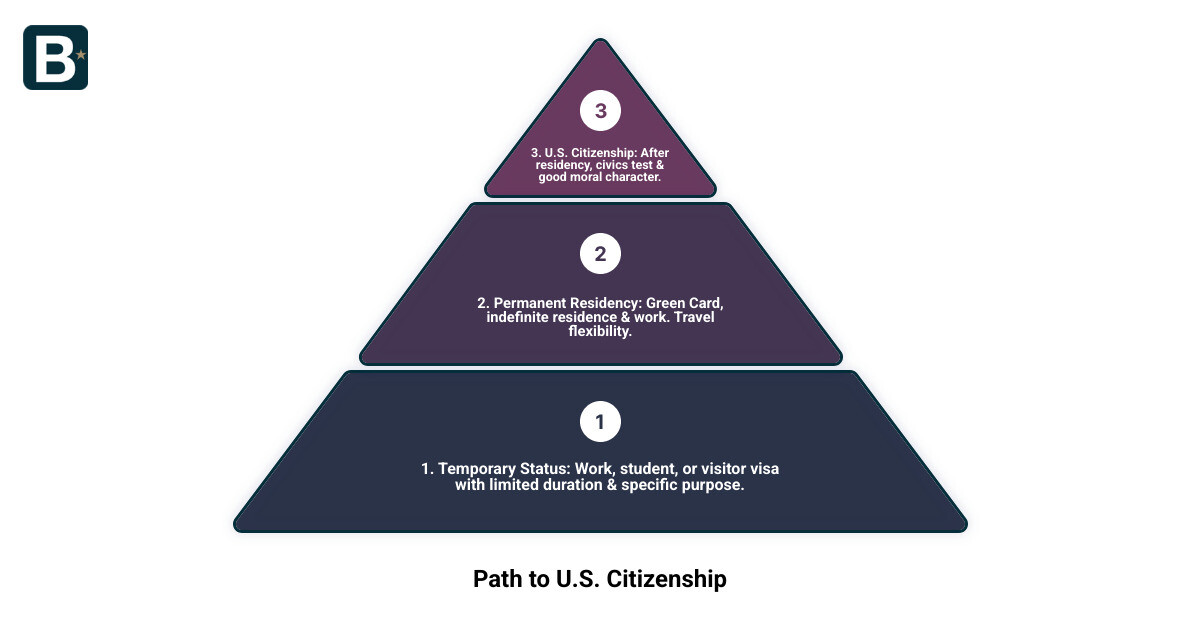
Pathways to U.S. Permanent Residency (The Green Card)
Becoming a Lawful Permanent Resident (LPR) in the United States, or obtaining a “Green Card,” is a dream for many. The U.S. immigration system is vast and complex, offering several avenues to achieve this coveted status. Navigating these options can feel like a puzzle, but we’re here to help you understand the primary pathways and determine your potential eligibility for permanent residency.
Generally, a Green Card allows you to live and work permanently anywhere in the U.S., travel freely, and eventually apply for U.S. citizenship. The main pathways include employment-based immigration, family sponsorship, and special categories for humanitarian reasons or diversity. Each path has its own unique set of requirements and processes. For a comprehensive overview of employment and family-based options, you can explore our resources on Business and Employment-Based Visas and Green Card and refer to the official Green Card Eligibility Categories from USCIS.
Employment-Sponsored Immigration: EB-1, EB-2, and EB-3

Employment-sponsored immigration is a popular route for individuals with specific skills, education, or professional achievements. These categories are complex, requiring extensive documentation and a strategic approach. We work closely with individuals and employers in Northbrook, Glencoe, Chicago, Northfield, and Winnetka to ensure all requirements are met.
EB-1: Priority Workers
This category is for individuals who are at the very top of their field. It’s split into three sub-categories:
- EB-1A: Extraordinary Ability: For individuals with extraordinary ability in the sciences, arts, education, business, or athletics. This path does not require a job offer or labor certification, and can even be self-sponsored, but has an extremely high standard of proof. Think Nobel Prize winners or Olympic athletes – individuals with nationally or internationally recognized achievements.
- EB-1B: Outstanding Professors and Researchers: For professors or researchers with at least three years of experience, who have a full-time permanent job offer from a U.S. university or research institution, and who can demonstrate an outstanding record of accomplishments in their academic field.
- EB-1C: Multinational Managers or Executives: For executives or managers who have worked for a multinational corporation overseas for at least one year in the three years preceding the petition, and who intend to work in a similar capacity in the U.S. for an affiliate of the same employer.
EB-2: Professionals Holding Advanced Degrees or Persons of Exceptional Ability:
This category is for professionals with graduate degrees or those with exceptional ability in their field.
- It often involves a labor certification process, where the employer must demonstrate that there are no qualified U.S. workers available for the position.
- A significant sub-category here is the National Interest Waiver (NIW). This allows certain individuals with exceptional ability or an advanced degree to bypass the labor certification process if their work is deemed to be in the national interest of the United States. This can be self-sponsored if the individual’s work has substantial merit and national importance, and they are well-positioned to advance their proposed endeavor. We have guided many clients through the rigorous process of securing an NIW.
EB-3: Skilled Workers, Professionals, and Other Workers:
The EB-3 category is generally for individuals whose skills are needed in the U.S. but do not meet the higher criteria of EB-1 or EB-2.
- It also typically requires a labor certification process.
- This category is available to:
- Skilled Workers: Those with at least two years of job experience or training.
- Professionals: Those with a U.S. bachelor’s degree or its foreign equivalent.
- Other Workers: Those performing unskilled labor that is not temporary or seasonal.
For EB-2 and EB-3 categories, the labor certification process is a critical hurdle. It’s a rigorous recruitment process where the employer must prove to the Department of Labor that they attempted to recruit U.S. workers for the position but were unsuccessful. We understand the intricacies of this process and can help employers steer it effectively. You can learn more about this by reading our guide on Navigating Labor Certification for EB-2 and EB-3 Green Cards.
Beyond these core categories, we also assist clients with nonimmigrant (temporary) employment-sponsored visas that can sometimes lead to permanent residency, such as H-1B for specialty occupations, L-1A/B for intracompany transferees, O-1 for extraordinary ability, and E-1/E-2 treaty visas for investors and traders.
Family-Based Immigration
Reuniting families is a cornerstone of U.S. immigration policy. This pathway allows U.S. citizens and Lawful Permanent Residents (LPRs) to sponsor certain family members for Green Cards. The eligibility for permanent residency through family ties depends heavily on the relationship to the sponsor and the sponsor’s status.
Immediate Relatives of U.S. Citizens:
This is the most straightforward family-based category, as it is not subject to annual numerical limits, meaning there are generally no lengthy waiting lists for visa availability. Immediate relatives include:
- Spouses of U.S. citizens
- Unmarried children under 21 years old of U.S. citizens
- Parents of U.S. citizens (if the U.S. citizen is at least 21 years old)
Family Preference Categories:
Other family relationships are subject to annual numerical limitations, which can result in significant waiting periods due to backlogs. These categories include:
- First Preference (F1): Unmarried sons and daughters (21 years of age or older) of U.S. citizens.
- Second Preference (F2A): Spouses and children (unmarried and under 21) of LPRs.
- Second Preference (F2B): Unmarried sons and daughters (21 years of age or older) of LPRs.
- Third Preference (F3): Married sons and daughters of U.S. citizens.
- Fourth Preference (F4): Brothers and sisters of U.S. citizens (if the U.S. citizen is at least 21 years old).
Each preference category has different processing times, which are determined by the demand for visas and annual quotas. We guide families through this process, from filing the initial petition (Form I-130) to preparing for interviews and submitting necessary documentation. For more detailed information on family-based options, please visit our section on Family-Based Immigration.
The Application Process: Adjustment of Status vs. Consular Processing
Once you’ve identified a pathway, the next crucial step is understanding how to apply for your Green Card. There are two primary methods: Adjustment of Status (AOS) and Consular Processing. The choice depends largely on whether you are in the United States or abroad. We assist clients from our locations in Northfield, Glencoe, and Chicago with both processes.
Adjustment of Status (AOS): Applying from Within the U.S.
If you are already present in the U.S. and meet specific eligibility criteria, you may be able to “adjust” your immigration status from a temporary one (like a visitor, student, or worker visa) to that of a Lawful Permanent Resident without leaving the country. This involves filing Form I-485, Application to Register Permanent Residence or Adjust Status, with U.S. Citizenship and Immigration Services (USCIS).
AOS offers several advantages, such as allowing you to remain in the U.S. while your application is pending and, in many cases, to obtain work authorization (Form I-765) and travel permission (Form I-131, Advance Parole) concurrently. However, leaving the U.S. before Advance Parole is approved can lead to the automatic abandonment of your AOS application – a critical mistake we help our clients avoid!
Consular Processing: Applying from Abroad.
If you are outside the United States, or if you are ineligible for Adjustment of Status (e.g., due to unlawful presence or certain immigration violations), you will typically go through Consular Processing. This involves the National Visa Center (NVC) and a U.S. Embassy or Consulate in your home country.
After your immigrant petition (e.g., Form I-130 for family, Form I-140 for employment) is approved by USCIS, the NVC will collect all necessary documents and fees. Once your case is documentarily complete and a visa number is available, you will be scheduled for an interview at the U.S. Embassy or Consulate. The typical timeline for consular processing is 8 to 14 months, but this can vary significantly by country and consular workload.
Here’s a quick comparison:
| Feature | Adjustment of Status (AOS) | Consular Processing |
|---|---|---|
| Location of Applicant | Must be physically present in the U.S. | Must be outside the U.S. |
| Agency Involved | U.S. Citizenship and Immigration Services (USCIS) | National Visa Center (NVC) & U.S. Embassy/Consulate abroad |
| Travel During Process | Can apply for Advance Parole (Form I-131) to travel abroad | Must remain abroad until visa is issued |
| Work Authorization | Can apply for Employment Authorization Document (EAD) | Not available until entry into U.S. with immigrant visa |
| Interview Location | USCIS Field Office in the U.S. | U.S. Embassy or Consulate in applicant’s home country |
| Typical Timeline | Varies widely by category and USCIS office, can be lengthy | Generally 8-14 months after petition approval, varies by country |
| Risks | Fewer travel restrictions if Advance Parole is obtained | Potential for re-entry issues if previously in U.S. unlawfully |
We assist our clients in Northfield, Winnetka, and Chicago in determining the most appropriate path and preparing thoroughly for either process. For an in-depth look at AOS, check out The Essential Guide to Adjustment of Status in the United States.
Overcoming Problems: Timelines, Priority Dates, and Inadmissibility
The path to a Green Card isn’t always a straight line. Many applicants encounter problems related to timing, backlogs, or grounds of inadmissibility. Understanding these potential challenges is key to navigating the system successfully.
Timing and Priority Dates:
For many employment-based and family-preference categories, annual quotas and per-country limits mean a visa number may not be immediately available after your petition is approved. Your place in line is determined by your “priority date,” which is typically the date your petition (e.g., Form I-130 or I-140) was properly filed.
The U.S. Department of State publishes a monthly Visa Bulletin that indicates which priority dates are current for each category and country. If your priority date is not current, you enter a “backlog,” and you must wait until a visa number becomes available before you can proceed with your Green Card application. We help clients understand these backlogs and strategize for the best possible timing.
Grounds of Inadmissibility:
One of the most significant obstacles to eligibility for permanent residency is inadmissibility. This refers to certain reasons why an individual may be denied entry into the U.S. or a Green Card. Common grounds include:
- Health-Related Grounds: Certain communicable diseases, physical or mental disorders with harmful behavior, or drug abuse/addiction.
- Criminal Grounds: Convictions for certain crimes, particularly those involving moral turpitude, drug offenses, or multiple criminal convictions.
- Security Grounds: Involvement in espionage, terrorism, or other activities deemed a threat to national security.
- Public Charge: The requirement to demonstrate you are not likely to become a “public charge” – meaning you can support yourself financially and won’t rely on government assistance. This often requires an Affidavit of Support (Form I-864) from a sponsor.
- Immigration Violations: Prior unlawful presence in the U.S., misrepresentation to obtain a visa or other immigration benefit, or previous deportation.
- Alien Registration Requirement: A significant legal development mandates certain undocumented individuals in the U.S. to submit their biographical information and fingerprints to USCIS. Failure to register can lead to severe consequences, including fines up to $5,000, imprisonment up to 6 months, and additional immigration complications that could prevent future applications for permanent residency or citizenship. This new requirement, effective April 11, 2025, emphasizes the critical importance of compliance and seeking legal counsel if it applies to you.
Waivers of Inadmissibility:
Fortunately, not all grounds of inadmissibility are absolute. In many cases, it’s possible to apply for a “waiver” to overcome certain issues. For example, Form I-601, Application for Waiver of Grounds of Inadmissibility, may be available for individuals who can demonstrate extreme hardship to a qualifying U.S. citizen or LPR relative. Each waiver has specific criteria, and preparing a compelling case is crucial. We have experience in preparing and submitting waiver applications, helping our clients overcome these complex challenges.
Understanding Permanent Residency: Key Eligibility Factors

Beyond the specific pathways, there are overarching factors that determine your eligibility for permanent residency in the U.S. Regardless of whether you’re pursuing an employment-based or family-based Green Card, these foundational requirements must be met. We ensure our clients across Northbrook, Glencoe, and Winnetka understand and fulfill each of these critical elements.
At its core, U.S. immigration law requires applicants to demonstrate lawful status, good moral character, and no grounds of inadmissibility. The official USCIS Green Card Eligibility page provides a good starting point for general requirements.
Employment and Family-Based Eligibility Requirements
While the general requirements apply to all, the specifics of your chosen pathway will dictate the unique eligibility criteria you must satisfy.
Employment-Based Eligibility:
- Job Offer from a U.S. Employer: Most employment-based Green Cards (EB-2 and EB-3, and some EB-1s) require a job offer from a U.S. employer. This employer typically acts as your sponsor, filing the initial petition on your behalf.
- Labor Market Tests (PERM): For EB-2 and EB-3, the employer must undergo the Program Electronic Review Management (PERM) labor certification process. This involves extensive recruitment efforts to prove that no qualified U.S. workers are available, willing, and able to fill the position.
- Qualifications: You must possess the required education, skills, and work experience for the position as specified in the labor certification or petition. This could mean a bachelor’s degree, an advanced degree, or a certain number of years of experience.
- Designated Organization Support: For specific categories like the Start-Up Visa Program (though this is Canadian, the principle of support from a designated entity applies to some U.S. programs too), you might need support from a designated U.S. organization.
Family-Based Eligibility:
- Family Relationship to a U.S. Citizen or Permanent Resident: The foundation of family-based immigration is a qualifying relationship with a U.S. citizen or Lawful Permanent Resident. The type of relationship (spouse, child, parent, sibling) dictates the preference category and the speed of processing.
- Sponsor’s Financial Ability: Your U.S. citizen or LPR sponsor must demonstrate the financial ability to support you by filing Form I-864, Affidavit of Support. This typically requires proving an income at least 125% of the Federal Poverty Guidelines for their household size. This ensures you are not likely to become a public charge.
- Documentation and Evidence: You’ll need to provide extensive documentation to prove the bona fides of your relationship (e.g., marriage certificates, birth certificates, photos, joint financial documents) and your sponsor’s financial capacity.
The Importance of Maintaining Status and Meeting Obligations
Obtaining a Green Card is a significant achievement, but it comes with responsibilities. Maintaining your permanent resident status requires ongoing compliance with U.S. immigration laws and obligations.
- Continuous Residence and Physical Presence: To maintain your Green Card, you must generally intend to make the U.S. your permanent home. Extended absences from the U.S. can lead to a presumption that you have abandoned your permanent resident status. While you don’t need to be physically present in the U.S. every single day, prolonged periods outside the country (typically six months or more) can raise questions. To maintain your status, you generally need to be physically present in the U.S. for at least 730 days within any five-year period if you intend to apply for citizenship, though the specific residency obligation for maintaining PR status is less stringent.
- Avoiding Unlawful Presence: Once you become a permanent resident, it’s crucial to avoid any actions that could lead to unlawful presence or other immigration violations. This includes complying with all immigration laws and processes.
- Timely Renewals: Green Cards typically need to be renewed every 10 years. It’s important to file for renewal in a timely manner to avoid issues with employment, travel, or other benefits. Recently, USCIS extended the validity period for Green Card renewals to 36 months, providing more flexibility.
- Compliance with U.S. Laws: As a permanent resident, you are expected to obey all federal, state, and local laws. Certain criminal convictions can lead to removal (deportation) proceedings and the loss of your Green Card.
We advise all our clients on these critical obligations to ensure their continued residency in the U.S.
Frequently Asked Questions about Permanent Residency
We understand that you likely have many questions about eligibility for permanent residency and the Green Card process. Here are some of the most common inquiries we address for our clients in the Northfield area.
What is the main difference between a temporary visa and permanent residency?
This is a fundamental distinction!
- Temporary Visas (like student visas, work visas, or tourist visas) grant you permission to be in the U.S. for a limited duration and for a specific purpose. They typically have an expiration date, and you must adhere strictly to the conditions of that visa (e.g., you can’t work on a tourist visa).
- Permanent Residency (a Green Card) grants you the right to live and work indefinitely in the United States. It offers far greater freedoms, including access to social benefits (like public education and healthcare), the ability to sponsor certain family members, and serves as a direct pathway to citizenship after meeting specific residency requirements. Essentially, a temporary visa is a short-term visit with rules, while a Green Card is your long-term ticket to making the U.S. your home.
How are permanent residency applications assessed?
The assessment process for permanent residency applications is comprehensive and rigorous. It typically involves several layers of review:
- Eligibility Criteria: First and foremost, you must meet the specific eligibility requirements for the category under which you are applying (e.g., educational qualifications for EB-2, a bona fide relationship for family-based).
- Documentation Review: USCIS or the NVC will carefully review all submitted documents to ensure they are complete, accurate, and support your claim of eligibility. This includes identity documents, civil documents, proof of lawful entry, and evidence of relationships or employment.
- Admissibility Checks: This is where the government determines if you have any grounds of inadmissibility. This involves thorough background checks, including criminal history checks, security clearances, and medical examinations. The goal is to ensure you do not pose a threat to public health or safety, are not a national security risk, and are not likely to become a public charge.
- Interviews: Most Green Card applicants undergo an interview with an immigration officer (either at a USCIS field office for AOS or a U.S. Consulate for Consular Processing). This interview is an opportunity for the officer to verify the information in your application, ask follow-up questions, and assess your credibility and the bona fides of your case.
We prepare our clients extensively for each stage of this assessment, ensuring they are ready to present their case clearly and confidently.
Can I lose my permanent resident status?
Yes, unfortunately, permanent resident status can be lost. While a Green Card grants you permanent residency, it is not absolute or irreversible. Here are some common ways permanent resident status can be jeopardized:
- Abandonment of Status: If you take up permanent residence in another country, spend extended periods outside the U.S. (typically more than six months, especially over a year), or indicate an intention to abandon your U.S. residency, you could lose your Green Card.
- Criminal Inadmissibility: Committing certain crimes, particularly felonies or crimes involving moral turpitude, can lead to removal (deportation) proceedings and the revocation of your Green Card.
- Misrepresentation: If it is finded that you obtained your Green Card through fraud or misrepresentation (e.g., providing false information on your application), your status can be revoked.
- Failure to Register: As highlighted earlier, the new alien registration requirement mandates certain individuals to register. Failure to comply could prevent future applications for permanent residency or citizenship, potentially impacting your ability to maintain or adjust your status.
- Failure to Remove Conditions: If you received a conditional Green Card (e.g., through marriage to a U.S. citizen and the marriage is less than two years old at the time of approval), you must apply to remove those conditions within a specific timeframe. Failure to do so can result in the termination of your conditional permanent resident status.
Maintaining your Green Card requires diligence and adherence to U.S. laws. If you have concerns about maintaining your status, we encourage you to seek legal advice promptly.
Conclusion
Navigating the intricate landscape of U.S. immigration law to achieve eligibility for permanent residency can be a daunting task. From understanding the nuances of employment-sponsored categories like EB-1, EB-2, and EB-3, to securing family sponsorships, and choosing between Adjustment of Status and Consular Processing, every step demands meticulous attention to detail and a strategic approach. We’ve seen how crucial it is to anticipate challenges like priority date backlogs and grounds of inadmissibility, and to prepare effectively with potential waivers.
At BIRG Law, we pride ourselves on offering dedicated, professional, and strategic legal services to individuals and businesses in Northbrook, Glencoe, Chicago, Northfield, and Winnetka. Our goal is to simplify this complex journey for you, providing the expertise needed to secure successful outcomes. Whether you’re just starting to explore your options or facing a specific hurdle, we are here to guide you.
Maintaining your permanent resident status is an ongoing responsibility, requiring continuous residence and compliance with U.S. laws. Staying informed and proactive is key to protecting your future in the United States. For example, did you know that Green Card Renewals Just Got Easier: USCIS Extends Validity to 36 Months?
We invite you to reach out to us, the best immigration law firm in Chicago, for a consultation . Let us help you chart a clear course toward achieving your dream of permanent residency in the U.S.