Eligibility for permanent residency in the United States depends on your specific pathway and personal circumstances. Here are the main ways you can qualify:
Primary Pathways to a Green Card:
General Requirements:
The U.S. immigration system offers multiple routes to permanent residency, but each pathway has distinct requirements. The process involves either Adjustment of Status (if you’re already in the country) or Consular Processing (if you’re applying from abroad).
Understanding which category you qualify for — and what documentation you’ll need — is the critical first step. Employment-based categories often require labor certification, while family-based applications depend on your relationship to a U.S. citizen or permanent resident. Some categories have annual quotas and multi-year backlogs, while immediate relatives of U.S. citizens face no numerical limits.
At Birg Law, we’ve spent over 30 years helping individuals and families steer the complexities of permanent residency eligibility through employment-based visas, family petitions, and strategic solutions for inadmissibility challenges. Our experience spans EB-1 extraordinary ability cases, National Interest Waivers, family reunification, and adjustment of status applications for clients from around the world.
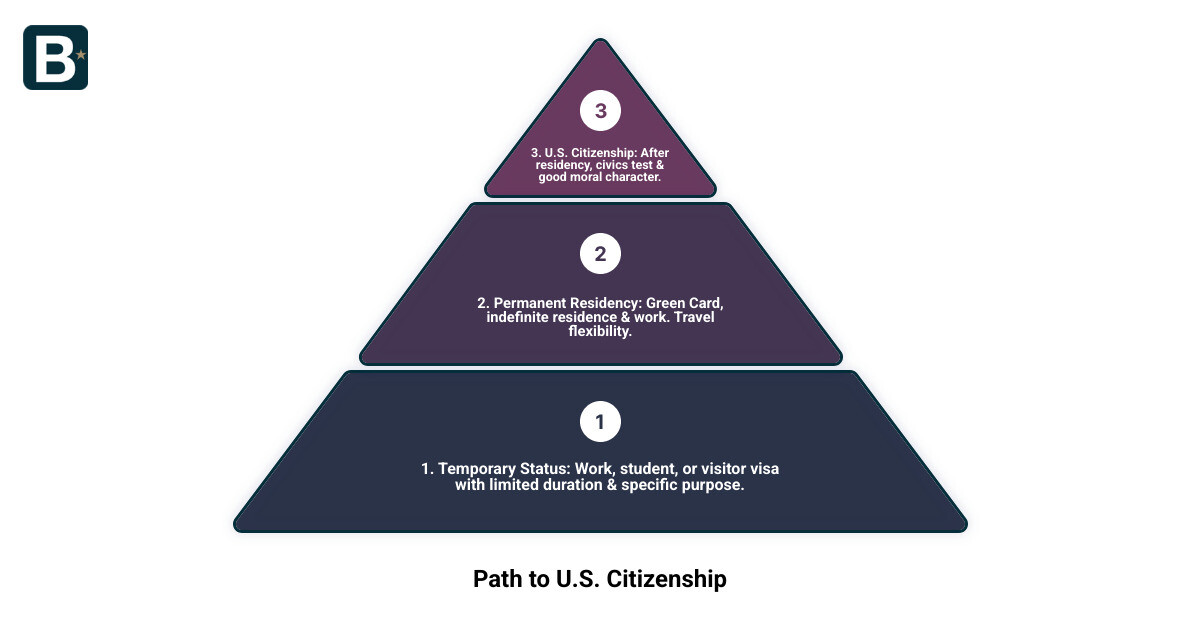
Becoming a Lawful Permanent Resident (LPR) in the United States, or obtaining a “Green Card,” is a dream for many. The U.S. immigration system is vast and complex, offering several avenues to achieve this coveted status. Navigating these options can feel like a puzzle, but we’re here to help you understand the primary pathways and determine your potential eligibility for permanent residency.
Generally, a Green Card allows you to live and work permanently anywhere in the U.S., travel freely, and eventually apply for U.S. citizenship. The main pathways include employment-based immigration, family sponsorship, and special categories for humanitarian reasons or diversity. Each path has its own unique set of requirements and processes. For a comprehensive overview of employment and family-based options, you can explore our resources on Business and Employment-Based Visas and Green Card and refer to the official Green Card Eligibility Categories from USCIS.

Employment-sponsored immigration is a popular route for individuals with specific skills, education, or professional achievements. These categories are complex, requiring extensive documentation and a strategic approach. We work closely with individuals and employers in Northbrook, Glencoe, Chicago, Northfield, and Winnetka to ensure all requirements are met.
EB-1: Priority Workers
This category is for individuals who are at the very top of their field. It’s split into three sub-categories:
EB-2: Professionals Holding Advanced Degrees or Persons of Exceptional Ability:
This category is for professionals with graduate degrees or those with exceptional ability in their field.
EB-3: Skilled Workers, Professionals, and Other Workers:
The EB-3 category is generally for individuals whose skills are needed in the U.S. but do not meet the higher criteria of EB-1 or EB-2.
For EB-2 and EB-3 categories, the labor certification process is a critical hurdle. It’s a rigorous recruitment process where the employer must prove to the Department of Labor that they attempted to recruit U.S. workers for the position but were unsuccessful. We understand the intricacies of this process and can help employers steer it effectively. You can learn more about this by reading our guide on Navigating Labor Certification for EB-2 and EB-3 Green Cards.
Beyond these core categories, we also assist clients with nonimmigrant (temporary) employment-sponsored visas that can sometimes lead to permanent residency, such as H-1B for specialty occupations, L-1A/B for intracompany transferees, O-1 for extraordinary ability, and E-1/E-2 treaty visas for investors and traders.
Reuniting families is a cornerstone of U.S. immigration policy. This pathway allows U.S. citizens and Lawful Permanent Residents (LPRs) to sponsor certain family members for Green Cards. The eligibility for permanent residency through family ties depends heavily on the relationship to the sponsor and the sponsor’s status.
Immediate Relatives of U.S. Citizens:
This is the most straightforward family-based category, as it is not subject to annual numerical limits, meaning there are generally no lengthy waiting lists for visa availability. Immediate relatives include:
Family Preference Categories:
Other family relationships are subject to annual numerical limitations, which can result in significant waiting periods due to backlogs. These categories include:
Each preference category has different processing times, which are determined by the demand for visas and annual quotas. We guide families through this process, from filing the initial petition (Form I-130) to preparing for interviews and submitting necessary documentation. For more detailed information on family-based options, please visit our section on Family-Based Immigration.
Once you’ve identified a pathway, the next crucial step is understanding how to apply for your Green Card. There are two primary methods: Adjustment of Status (AOS) and Consular Processing. The choice depends largely on whether you are in the United States or abroad. We assist clients from our locations in Northfield, Glencoe, and Chicago with both processes.
Adjustment of Status (AOS): Applying from Within the U.S.
If you are already present in the U.S. and meet specific eligibility criteria, you may be able to “adjust” your immigration status from a temporary one (like a visitor, student, or worker visa) to that of a Lawful Permanent Resident without leaving the country. This involves filing Form I-485, Application to Register Permanent Residence or Adjust Status, with U.S. Citizenship and Immigration Services (USCIS).
AOS offers several advantages, such as allowing you to remain in the U.S. while your application is pending and, in many cases, to obtain work authorization (Form I-765) and travel permission (Form I-131, Advance Parole) concurrently. However, leaving the U.S. before Advance Parole is approved can lead to the automatic abandonment of your AOS application – a critical mistake we help our clients avoid!
Consular Processing: Applying from Abroad.
If you are outside the United States, or if you are ineligible for Adjustment of Status (e.g., due to unlawful presence or certain immigration violations), you will typically go through Consular Processing. This involves the National Visa Center (NVC) and a U.S. Embassy or Consulate in your home country.
After your immigrant petition (e.g., Form I-130 for family, Form I-140 for employment) is approved by USCIS, the NVC will collect all necessary documents and fees. Once your case is documentarily complete and a visa number is available, you will be scheduled for an interview at the U.S. Embassy or Consulate. The typical timeline for consular processing is 8 to 14 months, but this can vary significantly by country and consular workload.
Here’s a quick comparison:
| Feature | Adjustment of Status (AOS) | Consular Processing |
|---|---|---|
| Location of Applicant | Must be physically present in the U.S. | Must be outside the U.S. |
| Agency Involved | U.S. Citizenship and Immigration Services (USCIS) | National Visa Center (NVC) & U.S. Embassy/Consulate abroad |
| Travel During Process | Can apply for Advance Parole (Form I-131) to travel abroad | Must remain abroad until visa is issued |
| Work Authorization | Can apply for Employment Authorization Document (EAD) | Not available until entry into U.S. with immigrant visa |
| Interview Location | USCIS Field Office in the U.S. | U.S. Embassy or Consulate in applicant’s home country |
| Typical Timeline | Varies widely by category and USCIS office, can be lengthy | Generally 8-14 months after petition approval, varies by country |
| Risks | Fewer travel restrictions if Advance Parole is obtained | Potential for re-entry issues if previously in U.S. unlawfully |
We assist our clients in Northfield, Winnetka, and Chicago in determining the most appropriate path and preparing thoroughly for either process. For an in-depth look at AOS, check out The Essential Guide to Adjustment of Status in the United States.
The path to a Green Card isn’t always a straight line. Many applicants encounter problems related to timing, backlogs, or grounds of inadmissibility. Understanding these potential challenges is key to navigating the system successfully.
Timing and Priority Dates:
For many employment-based and family-preference categories, annual quotas and per-country limits mean a visa number may not be immediately available after your petition is approved. Your place in line is determined by your “priority date,” which is typically the date your petition (e.g., Form I-130 or I-140) was properly filed.
The U.S. Department of State publishes a monthly Visa Bulletin that indicates which priority dates are current for each category and country. If your priority date is not current, you enter a “backlog,” and you must wait until a visa number becomes available before you can proceed with your Green Card application. We help clients understand these backlogs and strategize for the best possible timing.
Grounds of Inadmissibility:
One of the most significant obstacles to eligibility for permanent residency is inadmissibility. This refers to certain reasons why an individual may be denied entry into the U.S. or a Green Card. Common grounds include:
Waivers of Inadmissibility:
Fortunately, not all grounds of inadmissibility are absolute. In many cases, it’s possible to apply for a “waiver” to overcome certain issues. For example, Form I-601, Application for Waiver of Grounds of Inadmissibility, may be available for individuals who can demonstrate extreme hardship to a qualifying U.S. citizen or LPR relative. Each waiver has specific criteria, and preparing a compelling case is crucial. We have experience in preparing and submitting waiver applications, helping our clients overcome these complex challenges.
Beyond the specific pathways, there are overarching factors that determine your eligibility for permanent residency in the U.S. Regardless of whether you’re pursuing an employment-based or family-based Green Card, these foundational requirements must be met. We ensure our clients across Northbrook, Glencoe, and Winnetka understand and fulfill each of these critical elements.
At its core, U.S. immigration law requires applicants to demonstrate lawful status, good moral character, and no grounds of inadmissibility. The official USCIS Green Card Eligibility page provides a good starting point for general requirements.
While the general requirements apply to all, the specifics of your chosen pathway will dictate the unique eligibility criteria you must satisfy.
Employment-Based Eligibility:
Family-Based Eligibility:
Obtaining a Green Card is a significant achievement, but it comes with responsibilities. Maintaining your permanent resident status requires ongoing compliance with U.S. immigration laws and obligations.
We advise all our clients on these critical obligations to ensure their continued residency in the U.S.
We understand that you likely have many questions about eligibility for permanent residency and the Green Card process. Here are some of the most common inquiries we address for our clients in the Northfield area.
This is a fundamental distinction!
The assessment process for permanent residency applications is comprehensive and rigorous. It typically involves several layers of review:
We prepare our clients extensively for each stage of this assessment, ensuring they are ready to present their case clearly and confidently.
Yes, unfortunately, permanent resident status can be lost. While a Green Card grants you permanent residency, it is not absolute or irreversible. Here are some common ways permanent resident status can be jeopardized:
Maintaining your Green Card requires diligence and adherence to U.S. laws. If you have concerns about maintaining your status, we encourage you to seek legal advice promptly.
Navigating the intricate landscape of U.S. immigration law to achieve eligibility for permanent residency can be a daunting task. From understanding the nuances of employment-sponsored categories like EB-1, EB-2, and EB-3, to securing family sponsorships, and choosing between Adjustment of Status and Consular Processing, every step demands meticulous attention to detail and a strategic approach. We’ve seen how crucial it is to anticipate challenges like priority date backlogs and grounds of inadmissibility, and to prepare effectively with potential waivers.
At BIRG Law, we pride ourselves on offering dedicated, professional, and strategic legal services to individuals and businesses in Northbrook, Glencoe, Chicago, Northfield, and Winnetka. Our goal is to simplify this complex journey for you, providing the expertise needed to secure successful outcomes. Whether you’re just starting to explore your options or facing a specific hurdle, we are here to guide you.
Maintaining your permanent resident status is an ongoing responsibility, requiring continuous residence and compliance with U.S. laws. Staying informed and proactive is key to protecting your future in the United States. For example, did you know that Green Card Renewals Just Got Easier: USCIS Extends Validity to 36 Months?
We invite you to reach out to us, the best immigration law firm in Chicago, for a consultation . Let us help you chart a clear course toward achieving your dream of permanent residency in the U.S.